
Homeowner Guide
What Causes Dry Rot?
A homeowner’s guide to spotting dry rot early, understanding what causes it, and knowing when to call for repair.
The Real Causes Behind Dry Rot
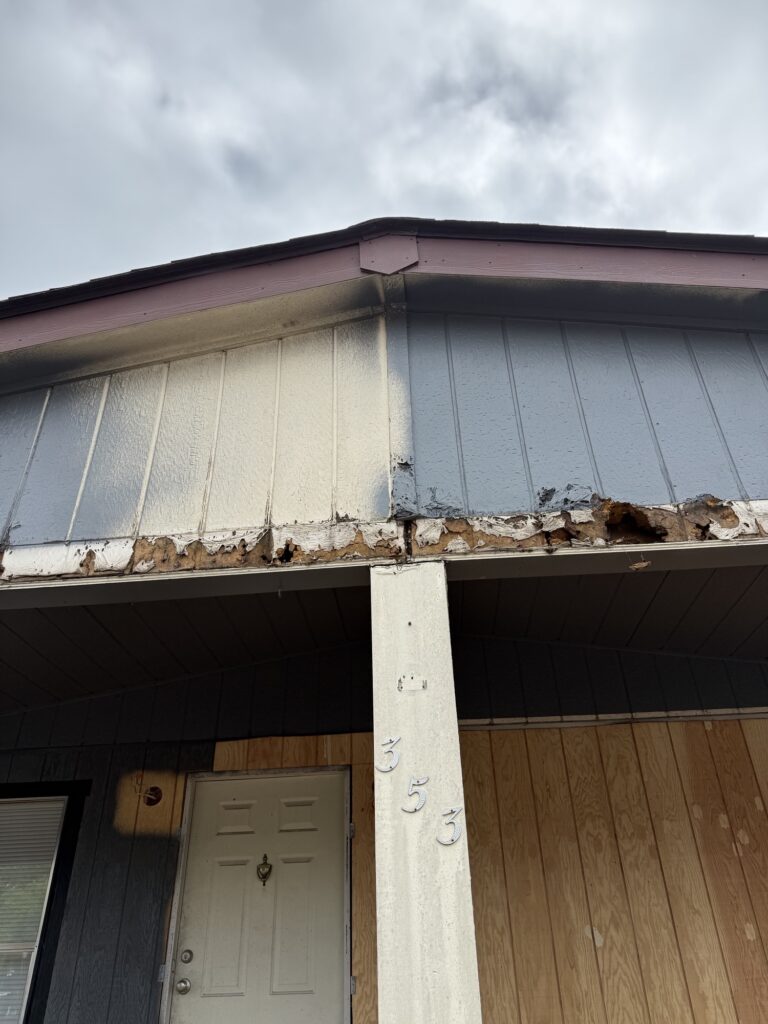
Dry rot usually is not caused by one dramatic event. It develops when several conditions work together over time, such as repeated moisture exposure, poor drainage, failed paint or caulking, high humidity, limited airflow, sun-damaged exterior coatings, or wood positioned where it cannot dry properly. A small leak around a window, clogged gutter, damaged flashing, or board sitting too close to soil may not look serious at first, but repeated wetting can eventually raise the wood’s moisture content enough for decay fungi to become active.
That is why finding dry rot means looking beyond the damaged board itself. The important questions are where the moisture came from, how long the area has been staying wet, whether nearby materials are also affected, and what allowed the water to remain trapped. Temperature, freeze-thaw cycles, gravity, UV exposure, material type, and the location of the wood can all influence how quickly the problem develops. Understanding those factors helps homeowners fix the actual cause instead of replacing visible damage only to have the same problem return.
Moisture Is the Main Trigger for Wood Decay
Dry rot and other wood-decay fungi need sustained moisture to develop. A useful rule of thumb is that wood kept below about 20% moisture content is generally considered safe from decay, while the risk increases significantly as moisture approaches the fiber saturation range, typically around 25% to 30%. Short-term rain exposure does not automatically mean wood will rot. The real problem is wood that repeatedly gets wet and cannot dry, such as framing behind failed siding, sheathing below leaking flashing, fascia beneath overflowing gutters, or posts and trim positioned where they remain in contact with damp surfaces. The longer the wood stays wet, the more opportunity fungi have to establish and begin breaking down the material.
Humidity Can Create Conditions for Moisture Problems
High humidity and liquid water are not the same thing, but sustained humidity can still raise the moisture content of wood and create conditions favorable for mold and eventual decay. Poorly ventilated crawlspaces, attics, bathrooms, and wall cavities can remain damp for extended periods, particularly when condensation or ground moisture is also present. Wood exposed to very high relative humidity can slowly absorb moisture even without an obvious leak. If that elevated humidity is combined with plumbing leaks, roof leaks, condensation, or water intrusion from the exterior, the wood can move into the moisture range where decay becomes possible. Good ventilation, drainage, and moisture control are therefore important even when there is no visible standing water.
Temperature Controls How Quickly Decay Develops
Moisture is necessary for decay, but temperature affects how actively wood-decay fungi grow. Research from the U.S. Forest Products Laboratory indicates that most wood-decay fungi grow best at roughly 70°F to 90°F, although the exact range varies by species. Cold conditions slow fungal activity significantly, and frozen wood does not support active decay in the same way warm, wet wood does. This is why moisture damage may appear to progress slowly during colder weather and become more noticeable once temperatures rise. The important point is that winter does not eliminate the moisture problem. If wet wood remains in place until warmer conditions return, decay can continue once conditions become favorable again.
Freeze-Thaw Cycles Can Worsen Existing Openings
Freezing temperatures do not create dry rot by themselves, but water entering exterior materials can contribute to physical deterioration as temperatures rise and fall. Moisture can enter small cracks, joints, damaged coatings, masonry, or gaps around exterior components. When that water freezes, expansion can place additional stress on already vulnerable materials, and thawing returns it to liquid water that can move farther into the assembly. Repeated wetting, drying, freezing, and thawing can gradually make existing defects worse. For homeowners, the practical takeaway is to address open joints, failed flashing, cracked sealants, and other water-entry points before repeated weather exposure enlarges the problem.
Some Wood Products Resist Decay Better Than Others
Not all wood reacts the same way to moisture. The natural heartwood of certain species, including some cedar and redwood, contains compounds that provide greater resistance to decay than untreated sapwood or common framing lumber. Pressure-treated lumber is also manufactured specifically to improve resistance in applications where moisture exposure is expected. That does not make any wood completely rot-proof. Cut ends, damaged coatings, prolonged saturation, poor installation, and constant ground contact can eventually create problems even with more durable materials. Material selection matters, but it still needs to be paired with proper drainage, clearances, flashing, and routine maintenance.
Water Can Enter One Place And Cause Damage Somewhere Else
The first place you see damage is not necessarily where the water entered. Once water gets behind roofing, siding, flashing, or trim, gravity can carry it downward through wall cavities, along framing, or across other building materials before it finally collects somewhere visible. A stained baseboard might originate from a window several feet above it, and damaged framing below a deck connection may be caused by water entering higher on the wall. That is why repairing only the visibly rotten board can fail. A proper dry rot repair should include finding the moisture pathway and correcting the original entry point before damaged materials are replaced.
UV Exposure Gradually Breaks Down Exterior Protection
Sunlight does not directly cause fungal decay, but UV exposure can weaken many of the materials that help keep water away from wood. Paint can fade, chalk, crack, or lose adhesion, while some sealants and exposed wood surfaces deteriorate after years of weather exposure. South- and west-facing areas often receive heavier sun exposure, although actual conditions depend on the home and surrounding trees or structures. Once coatings or sealants begin failing, rain has a much easier pathway into the material underneath. Regularly inspecting paint, caulking, trim, siding, and exposed wood helps identify those protective layers before they deteriorate enough to allow recurring moisture intrusion.
Location Matters as Much as the Wood Itself
Two pieces of the same lumber on the same house can perform very differently depending on where they are installed. Wood close to soil, concrete, roofing, vegetation, or other moisture-holding materials often stays wet longer after rainfall. Shaded areas and north-facing sections may also receive less sunlight and airflow, which slows drying. Deck posts, lower siding, door thresholds, window sills, fascia, and areas beneath poorly draining rooflines are common places where moisture can remain trapped. Providing proper clearance, drainage, ventilation, and separation from wet materials gives wood a better chance to dry between rain events and can substantially reduce the conditions that lead to decay.
If a homeowner finds soft wood, discoloration, peeling paint, or an area that repeatedly stays wet, the most important step is to determine why the moisture is there before replacing the damaged wood. If the source is not obvious, Foshay Contracting can help inspect the area and explain what may need to be repaired before the damage spreads.
Frequently Asked Questions
Is dry rot the same as wet rot?
No. Both are wood decay caused by fungus, but they behave differently. Dry rot can spread across dry wood surfaces once established and is generally harder to fully eliminate, while wet rot stays contained to areas that remain consistently wet and typically stops spreading once the moisture source is removed.
Can dry rot spread to healthy wood nearby?
Yes. Dry rot fungus can extend through masonry and behind wall cavities to reach new wood sources, which is why it often causes more damage than the original leak or moisture point would suggest.
How much does dry rot repair cost?
Cost depends on how much wood is affected, how far the fungus has spread, and whether structural framing is involved versus trim or siding. An in-home inspection is the only accurate way to scope the repair and provide real pricing.
Do you handle dry rot repair in my area?
Yes. We repair dry rot damage throughout Eugene, Springfield, Junction City, Veneta, Creswell, and Pleasant Hill, both interior and exterior.
Dry Rot Issues? Click or Call Below For A Free Inspection

Licensed, bonded, and insured general contractor serving Eugene, Springfield, and surrounding areas.
CCB #231960
Memberships: Eugene Builders Exchange, BBB, Springfield Chamber of Commerce, BNI
Interior
Exterior
Fences
Contact
Eugene, Springfield, Junction City, Veneta, Creswell, Pleasant Hill
Mon–Fri 8am–5pm · Sat–Sun closed
© 2026 Foshay Contracting LLC. All rights reserved.
CCB #231960